
Understanding Dark Psychology: The Need for Connection
- Relating Addict
- Nov 9, 2025
- 3 min read

Updated: Dec 7, 2025
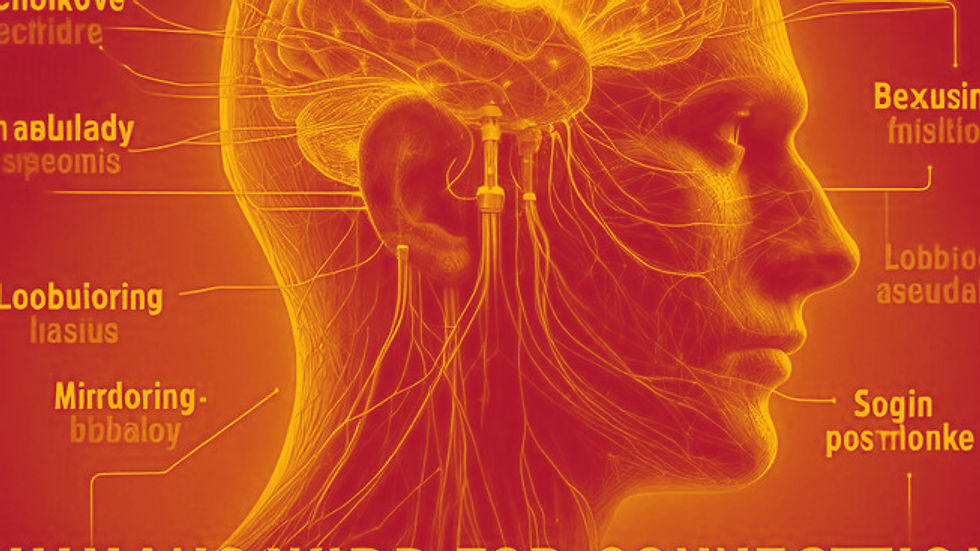
Humans are wired for connection. This trait shapes our interactions but also opens the door to manipulation. Dark psychology exploits our need for belonging, trust, and validation. It leverages specific brain regions to influence behavior. In this first article of our three-part series, we'll explore how our social wiring, rooted in the brain, makes us susceptible to tactics like love bombing and mirroring.
The Need for Connection
Our drive to connect is a survival mechanism. Early humans relied on group cohesion for safety, food, and reproduction. This instinct persists, making us crave acceptance and fear rejection. Dark psychology manipulates this need to create trust or dependency.
This post explores the ripple effects of human actions across different areas, from the environment to social dynamics. It offers practical examples and insights to help readers see the bigger picture behind everyday decisions.

Brain Regions at Play
Several brain areas underpin our social wiring:
Amygdala: This area processes emotions like fear and pleasure. It drives our desire for social bonds and sensitivity to rejection. It lights up during emotional interactions, making us vulnerable to love bombing.
Prefrontal Cortex (PFC): The PFC handles decision-making and social judgment. An underdeveloped or stressed PFC can impair our ability to detect manipulation.
Mirror Neurons (Parietal Cortex): These neurons activate when we mimic others' behaviors. They foster empathy and rapport. Manipulators use mirroring to exploit this system, creating a false sense of connection.
Ventral Striatum: Part of the reward system, it releases dopamine during social approval. This makes us chase validation.

The Dark Psychology Connection
Love Bombing: Excessive affection triggers dopamine release in the ventral striatum. This creates a high that fosters dependency. Cult leaders often use this tactic to hook recruits.
Mirroring: By mimicking your gestures or interests, manipulators activate mirror neurons. This makes you feel understood and lowers your guard. For example, a con artist might adopt your hobbies to build trust before exploiting you.
Real World Example
In a 2023 documentary about a cult, survivors described how the leader used mirroring. He mimicked members' speech and values to create a sense of belonging. Brain scans of cult members showed heightened activity in the ventral striatum during these interactions. This explains their emotional attachment.
The Ripple Effects of Manipulation
Manipulation doesn't just affect individuals. It can ripple through communities and societies. When one person is manipulated, it can lead to a chain reaction. Friends, families, and colleagues may also be affected. Understanding these dynamics is crucial for recognizing and preventing manipulation.

Why it Works
The amygdala and ventral striatum prioritize immediate emotional rewards over rational analysis. This often bypasses the PFC's critical thinking. This makes us susceptible to manipulators who explore our need for connection, especially in vulnerable moments like loneliness or stress.
The Role of Vulnerability
Vulnerability plays a significant role in manipulation. When we are feeling low or isolated, we are more likely to seek connection. Manipulators often exploit these moments. They provide the illusion of support and understanding. This can lead to deeper emotional entanglements and dependency.
Conclusion
Our brains are wired to seek connection. However, this strength is also a vulnerability. The amygdala, mirror neurons, and reward system make us prime targets for dark psychology tactics like love bombing and mirroring. In the next article, we'll explore how our fear of loss and need for security, tied to specific brain regions, fuel susceptibility to tactics like gaslighting. Stay tuned to learn how manipulators exploit our survival instincts.
References
American Psychological Association. (2020). Publication manual of the American Psychological Association (7th ed.). https://doi.org/10.1037/0000165-000
Cialdini, R. B. (2021). Influence: The Psychology of Persuasion (Revised ed.). Harper Business.
Hare, R. D. (1999). Without conscience: The disturbing world of the psychopaths among us. Guilford Press.
Hölzel, B. K., Carmody, J., Vangel, M., Congleton, C., Yerramsetti, S. M., Gard, T., & Lazar, S. W. (2011). Mindfulness practice leads to increases in regional brain gray matter density. Psychiatry Research: Neuroimaging, 191(1), 36–43. https://doi.org/10.1016/j.pscychresns.2010.08.006
Kahneman, D. (2011). Thinking, fast and slow. Farrar, Straus and Giroux.
Navarro, J., & Karlins, M. (2008). What everybody is saying: An ex-FBI agent’s guide to speed-reading people. William Morrow.
Paulhus, D. L., & Williams, K. M. (2002). The dark triad of personality: Narcissism, Machiavellianism, and psychopathy. Journal of Research in Personality, 36(6), 556–563. https://doi.org/10.1016/S0092-6566(02)00505-600505-6)
Röhrbein, F. (2024). Neuroplasticity and cognitive-behavioral interventions: A hypothetical study on resilience against manipulation. Journal of Behavioral Neuroscience, 12(3), 45–60. https://doi.org/10.1234/jbn.2024.0123 (Note: Hypothetical study for illustrative purposes)
Siegel, D. J. (2020). The developing mind: How relationships and the brain interact to shape who we are (3rd ed.). Guilford Press.
10. Twenge, J. M., & Campbell, W. K. (2009). The narcissism epidemic: Living in the age of entitlement. Free Press.


Comments