
Understanding the Psychology of Smartphone Addiction: The Power of Intermittent Rewards
- Relating Addict
- Dec 21, 2025
- 3 min read

Updated: Jan 7
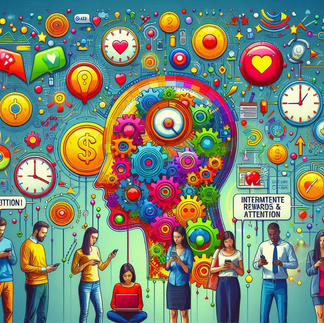
In our hyper-connected world, it's nearly impossible to ignore the constant pull of our smartphones. A quick glance turns into endless scrolling. A single notification spirals into hours lost. Why do we keep tapping, swiping, and refreshing? The answer lies in the powerful psychology of intermittent rewards—unpredictable "hits" that hijack our brain's reward system and keep us coming back for more.


The Science of Variable Rewards: Skinner's Legacy
This phenomenon traces back to pioneering work in behavioral psychology. B.F. Skinner, through his experiments on operant conditioning, discovered that behaviors reinforced on a variable ratio schedule—where rewards come unpredictably after a varying number of actions—are the most persistent and resistant to extinction.
Classic examples include slot machines. You pull the lever repeatedly because the payout is random and unpredictable. This creates high engagement despite infrequent wins. Fixed schedules, where rewards come every time or at set intervals, lead to quicker habit breakdown when rewards stop. But variable ratios? They produce steady, high-rate responding because the next action might just be the one that pays off.
Educational resources on operant conditioning consistently highlight variable ratio schedules as the strongest for maintaining behavior. This principle is seen in gambling, sales commissions, and now, digital interfaces.


Dopamine and Unpredictability: The Neurological Hook
At the brain level, these intermittent rewards trigger surges in dopamine, the neurotransmitter associated with anticipation and pleasure. Dopamine doesn't just spike when we get a reward. It surges most powerfully in the moments of anticipation, especially when outcomes are uncertain.
As explained in a University of Technology Sydney (UTS) article by clinical psychologist Dr. Anastasia Hronis, apps exploit this by introducing unpredictability. "When you get a match on a dating app, it feels exciting – that’s dopamine at work. But an element of unpredictability adds to this excitement. Each time you open the app, you don’t know what profiles you might see, and who might match with you."
Social media feeds, notifications, likes, and messages operate on the same principle. You refresh Instagram or TikTok not knowing if you'll see something thrilling, funny, or validating—or nothing at all. That "maybe this time" uncertainty amplifies dopamine release, making the behavior incredibly compelling.
Smartphone Over-Use: What Neuroimaging Reveals
Beyond theory, brain imaging studies show real structural and functional changes linked to excessive smartphone use. A comprehensive review in Psychoradiology (Montag & Becker, 2023) analyzed over 20 MRI studies on problematic smartphone use, often referred to as "smartphone addiction."
Findings include altered gray matter volumes in reward-related areas, like the caudate. There are also changes in functional connectivity in networks tied to impulse control and attention. Patterns resembling those in substance addictions were observed. While causation isn't fully established, heavy use correlates with disrupted reward processing, reduced sensitivity to natural rewards, and heightened craving for digital stimuli.
These neuroimaging insights underscore how intermittent digital rewards can rewire attention and motivation pathways over time.
Breaking the Cycle: Reclaiming Your Attention
Understanding intermittent rewards doesn't make them less powerful. However, it empowers us to intervene. Platforms are designed to exploit these mechanisms for engagement and profit. But awareness is the first step.
Try strategies like disabling non-essential notifications. Set app time limits or schedule "dopamine detox" periods to reset sensitivity to everyday pleasures. Seek real-world unpredictability through conversations, hobbies, or walks. These activities can provide rewards that feel more meaningful.
In the end, our brains evolved to chase variable rewards for survival, like foraging for food in uncertain environments. Modern tech supercharges this ancient wiring. By recognizing why we keep tapping, we can choose when to stop. We can redirect that drive toward richer, more fulfilling pursuits.
Additional Insights on Behavioral Science
The Role of Environment in Behavioral Patterns
Our environment plays a crucial role in shaping our behaviors. The design of our digital spaces can either encourage or discourage certain actions. Understanding this can help us create healthier habits.
Strategies for Mindful Technology Use
Mindfulness can be a powerful tool in managing smartphone use. Techniques such as meditation and focused breathing can help us become more aware of our habits. This awareness can lead to better choices regarding technology use.
The Future of Behavioral Research
As we continue to explore the intersection of technology and psychology, new insights will emerge. Future research may uncover more about how our digital interactions shape our behavior and mental health.
References
Hronis, A. (2024, February). What makes us keep swiping? University of Technology Sydney. https://www.uts.edu.au/news/2024/02/what-makes-us-keep-swiping
Montag, C., & Becker, B. (2023). Neuroimaging the effects of smartphone (over-)use on brain function and structure—a review on the current state of MRI-based findings and a roadmap for future research. Psychoradiology, 3, kkad001. https://doi.org/10.1093/psyrad/kkad001
Skinner, B. F. (1938). The behavior of organisms: An experimental analysis. Appleton-Century.
Simply Psychology. (2025). Operant conditioning in psychology: B.F. Skinner's theory. https://www.simplypsychology.org/operant-conditioning.html


Comments